
Planning and Resources

“Would You Rather?” is a quick, interactive activity where students are presented with two financial choices and must decide which option they prefer and explain why. For example, they might choose between saving money for the future or spending it on something they want now. This activity encourages critical thinking, discussion, and personal connection to financial concepts, while helping students practice justifying their decisions.
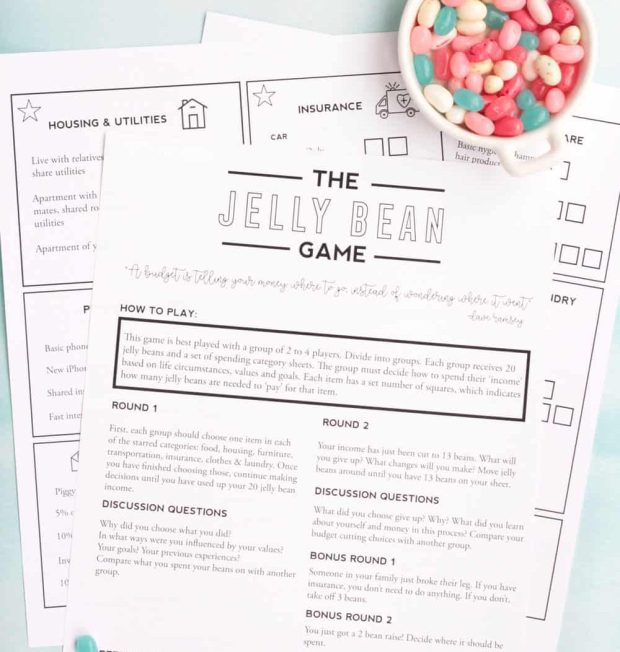
The Bean Game is an interactive budgeting simulation where students are given a set number of “beans” (or tokens) that represent their income, and they must allocate those beans across different expense categories such as housing, food, transportation, and savings. Each category has guidelines or required percentages, forcing students to make realistic financial decisions and prioritize their spending. As they work through the activity, students see how quickly money gets used and gain a better understanding of budgeting, trade-offs, and the importance of planning.
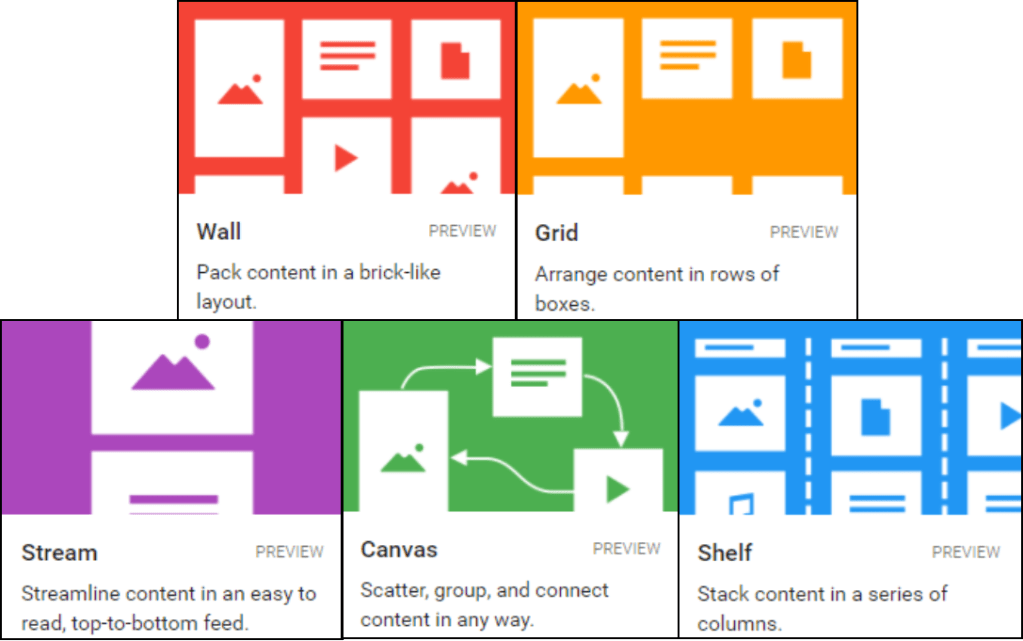
Padlet for Collaboration is a digital tool that allows students to share ideas, post their work, and respond to each other in a shared online space. In your classroom, students can upload their budget drafts or infographic ideas, leave comments, ask questions, and give peer feedback in real time. This encourages collaboration, reflection, and ongoing discussion, while also allowing you to monitor participation and provide guidance as students develop their understanding.
Student Work and Active Learning Activities
Creating Opportunities to Practice Learning Outcomes that Promote Retention
To help students retain the knowledge I’ve designed purposeful in class applications that is structured around project-based task that require students to use pre-class content through scenarios where I create a situation and ask students to make decisions, respond, and create physical/digital products for the class.
Financial Vision Board PBL
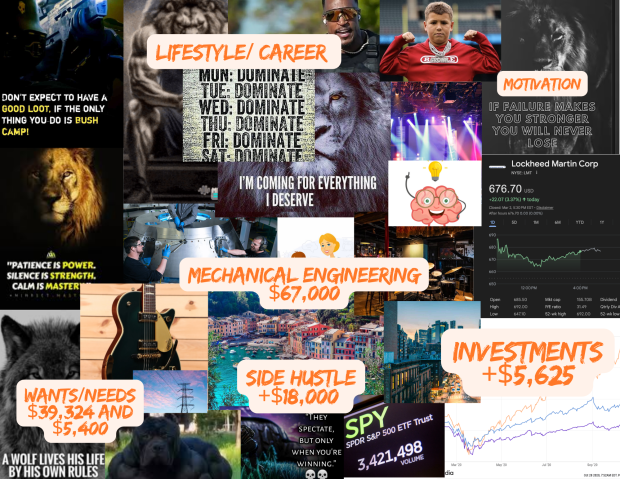

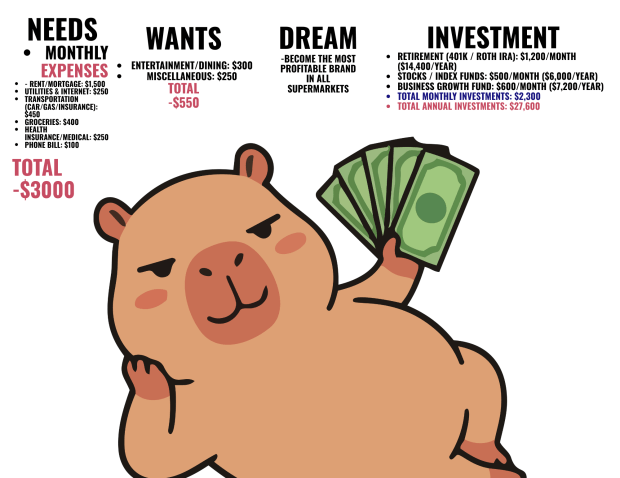
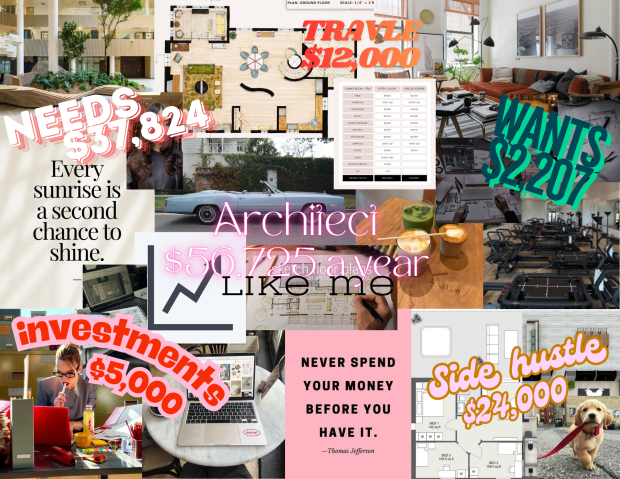
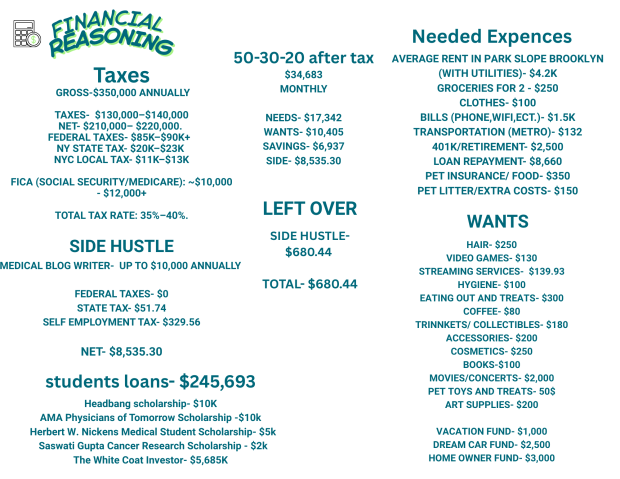
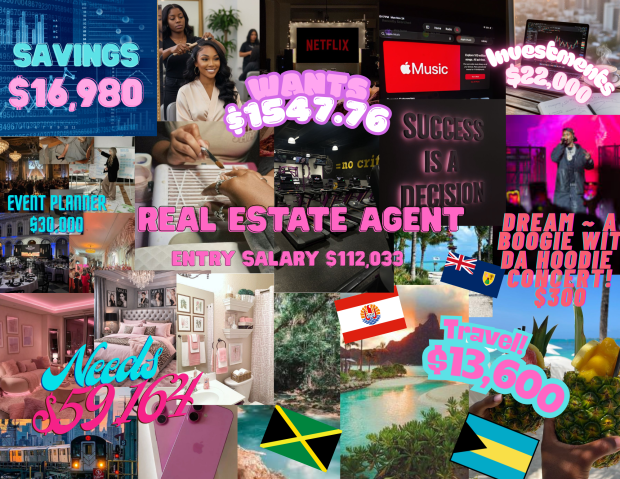
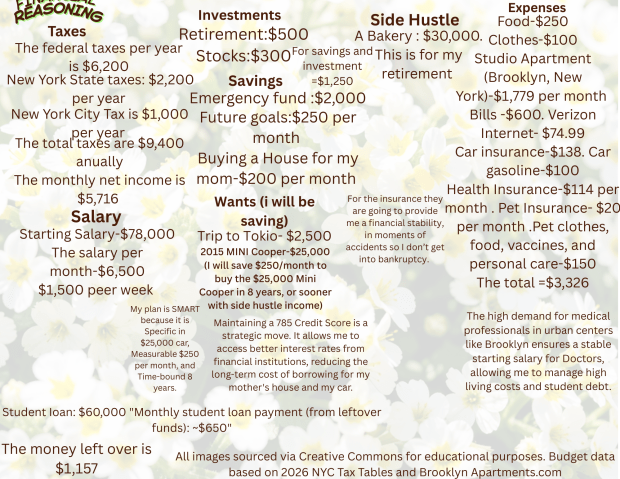
1. Personal Goal Mapping Activity
Students identify short-term, mid-term, and long-term financial goals (e.g., college, travel, home ownership). They connect these goals to potential careers and income levels, creating a roadmap that links present decisions to future outcomes.
2. Concept Application Outcomes
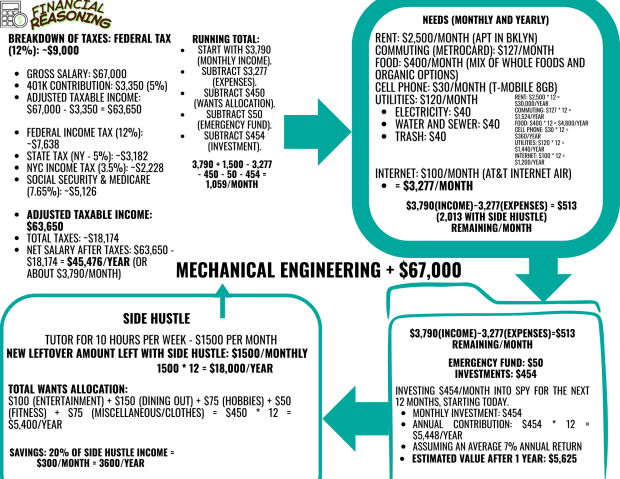
Students apply financial literacy concepts (budgeting, credit, taxes, savings, investing) to realistic personal scenarios. Accurately calculate net pay, monthly expenses, and long-term costs associated with career and college choices. Then they analyze how career decisions impact income, lifestyle, and financial stability.
3. Vision Board Creation & Reflection
Students create a visual financial vision board (digital) that represents their goals, values, and aspirations. They present their board to peers and write a reflection explaining how their financial choices today will impact their future.
Results: Why this supports retention?
When students repeatedly apply concepts to their own future plans, they encode the knowledge more deeply.
Monthly Budget Infographic PBL
1. Monthly Budget Tracker
Students are assigned a realistic scenario (career, salary, location, and lifestyle factors) and must create a monthly budget based on actual cost-of-living data. They make decisions about housing, food, transportation, and savings, then justify their choices in small group discussions.

2. Reflective & Metacognitive Outcomes
Students reflect on how their understanding of money and careers has evolved. Identify financial risks and opportunities in their own projected lifestyle. In the end they evaluate mistakes in financial scenarios and propose improved decisions.
3. Personal Finance Monthly Infographic Creation
Students design an infographic that visually represents their budget, including categories, percentages, and financial reasoning. They then participate in a peer review gallery walk, giving and receiving feedback on clarity, accuracy, and visual communication.
Results: Why this supports retention?
Reflection strengthens neural connections and consolidates learning.
Impact
Having students create financial vision boards and track their spending over a month significantly improve how well they undersood, applied, and retained concepts in a Career and Financial Management class. The impact goes beyond memorization, it built habits and personal relevance.
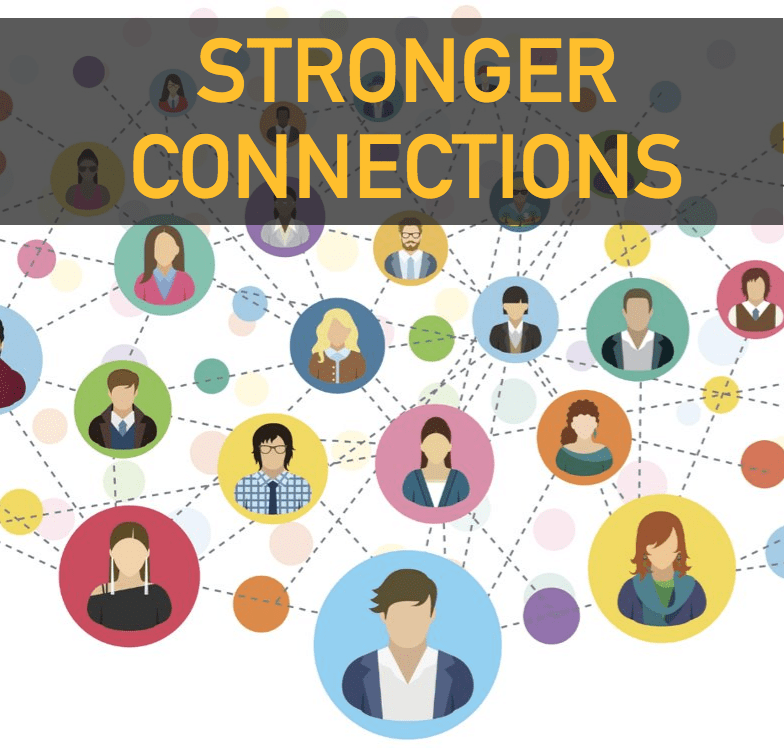
Stronger Personal Connection → Better Retention & Increased Engagement and Ownership
When students create a financial vision board or track their transaction over time, they’re connecting money concepts to their own goals (cars, college, travel, independence).
- This taps into motivation and emotion
- Learning becomes personally meaningful instead of abstract
- It reflects their life, not just school content
- They are more invested in outcomes
Engagement is directly tied to improved retention.
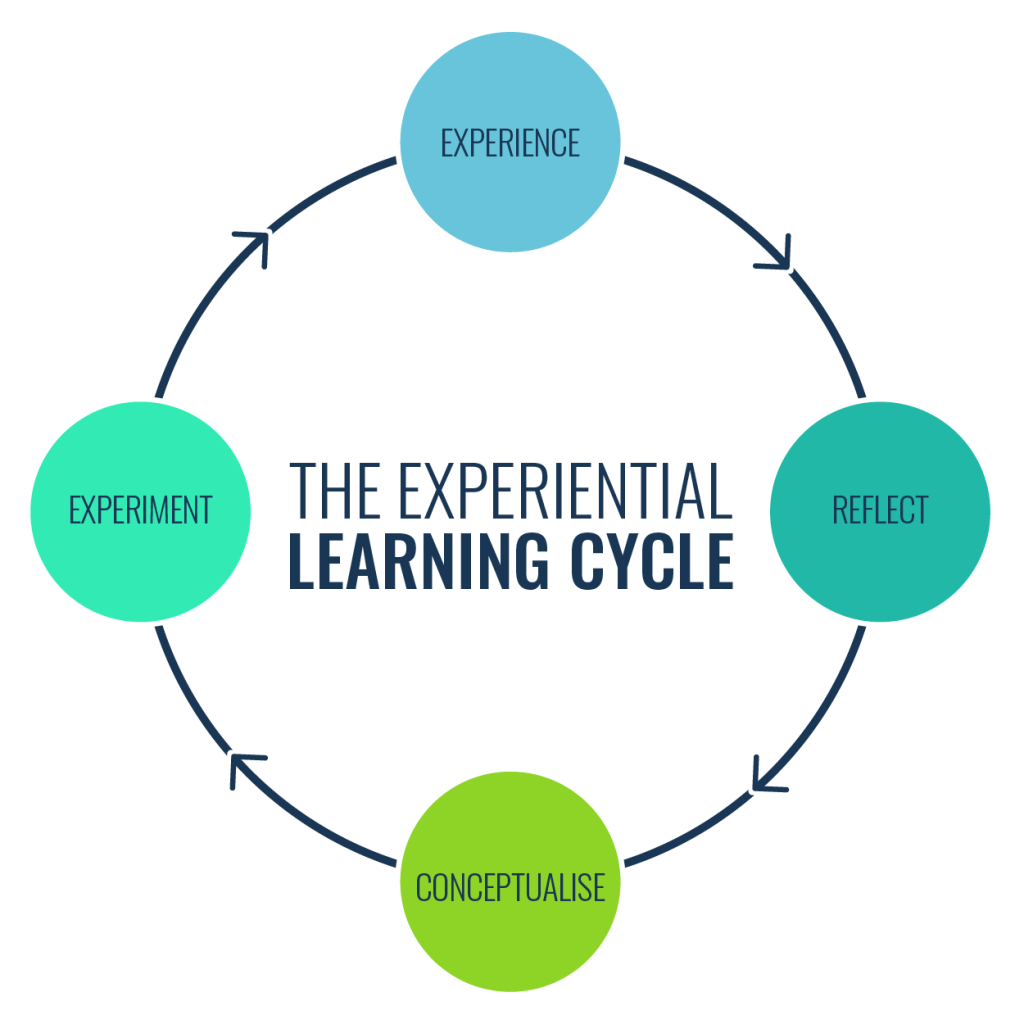
Experiential Learning (Learning by Doing)
Tracking spending over a month turns theory into real-life practice.
- Students actively apply budgeting, categorizing (needs vs. wants), and decision-making
- They see patterns in their own behavior
This kind of hands-on experience leads to deeper, longer-lasting understanding than lectures alone.
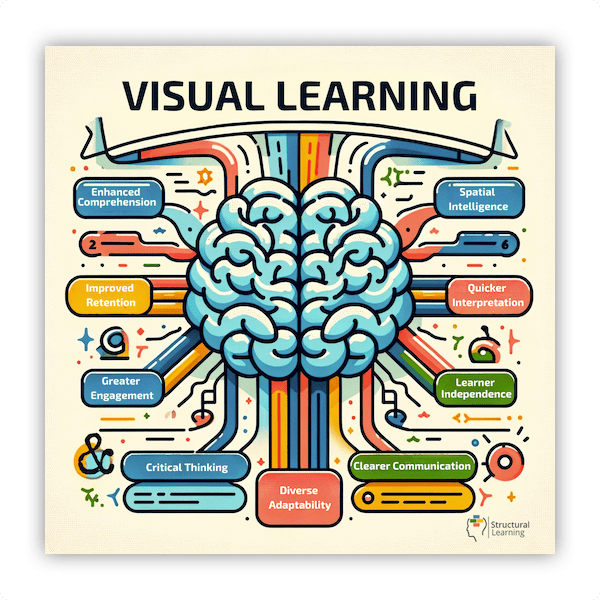
Visual Learning Enhances Memory & Behavior Change
Vision boards are visual tools that:
- Help students organize goals
- Make abstract ideas (like “financial stability”) concrete
- More mindful spending
- Increased saving
- Better decision-making
Visual + emotional + personal = higher recall. When students change behavior, the learning sticks much longer.
Big Idea
These activities shift learning from passive → active → personal → habitual, which is exactly what improves retention in financial education.
 Creative Designs and Technology Education